Product vision hypothesis

Turn security-system faults into verified service outcomes.

A proposed security-health service for multi-site customers. Cobalt and its local partners would connect selected technical events to accountable service work and keep each issue open until restoration is confirmed.

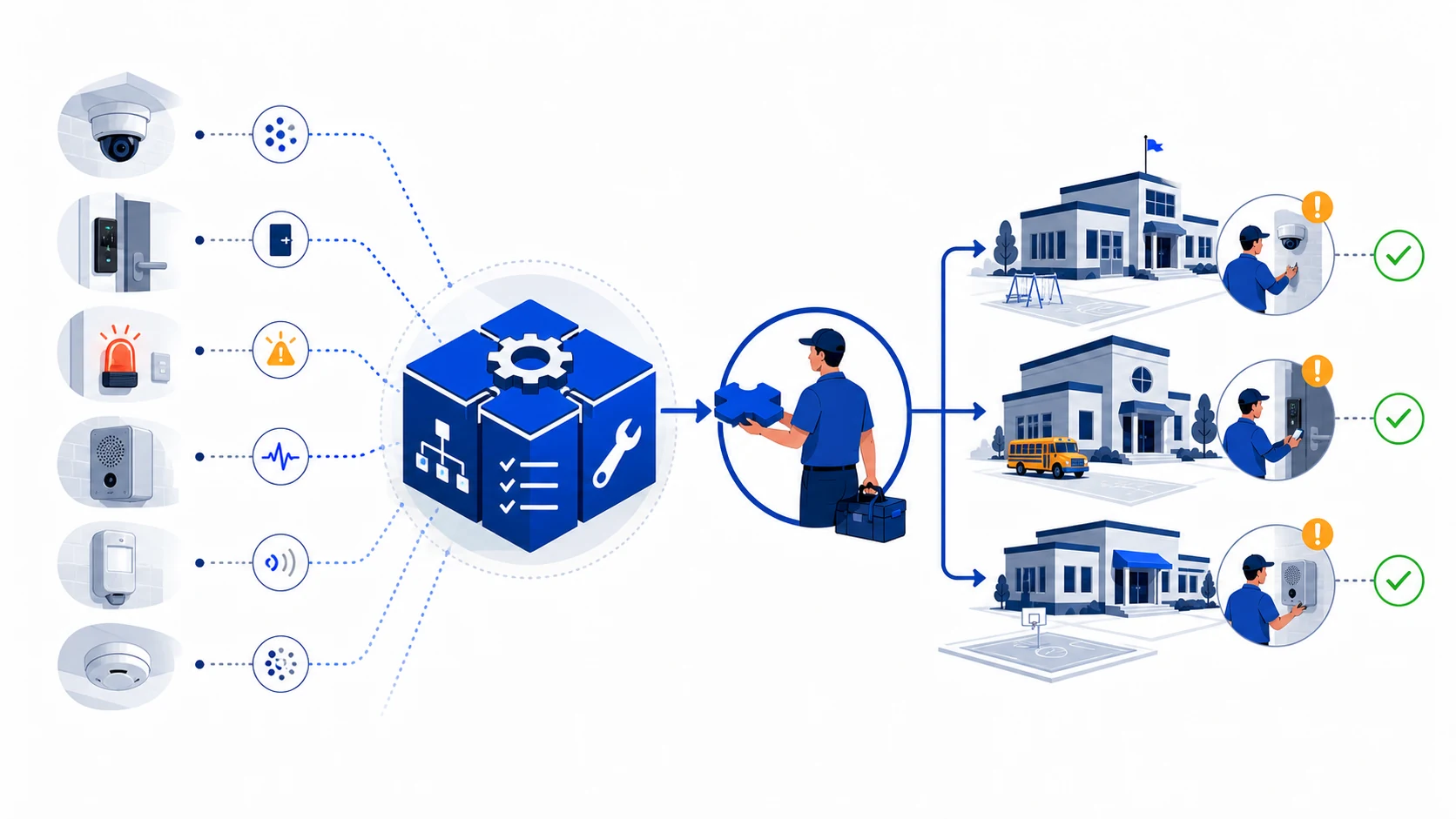
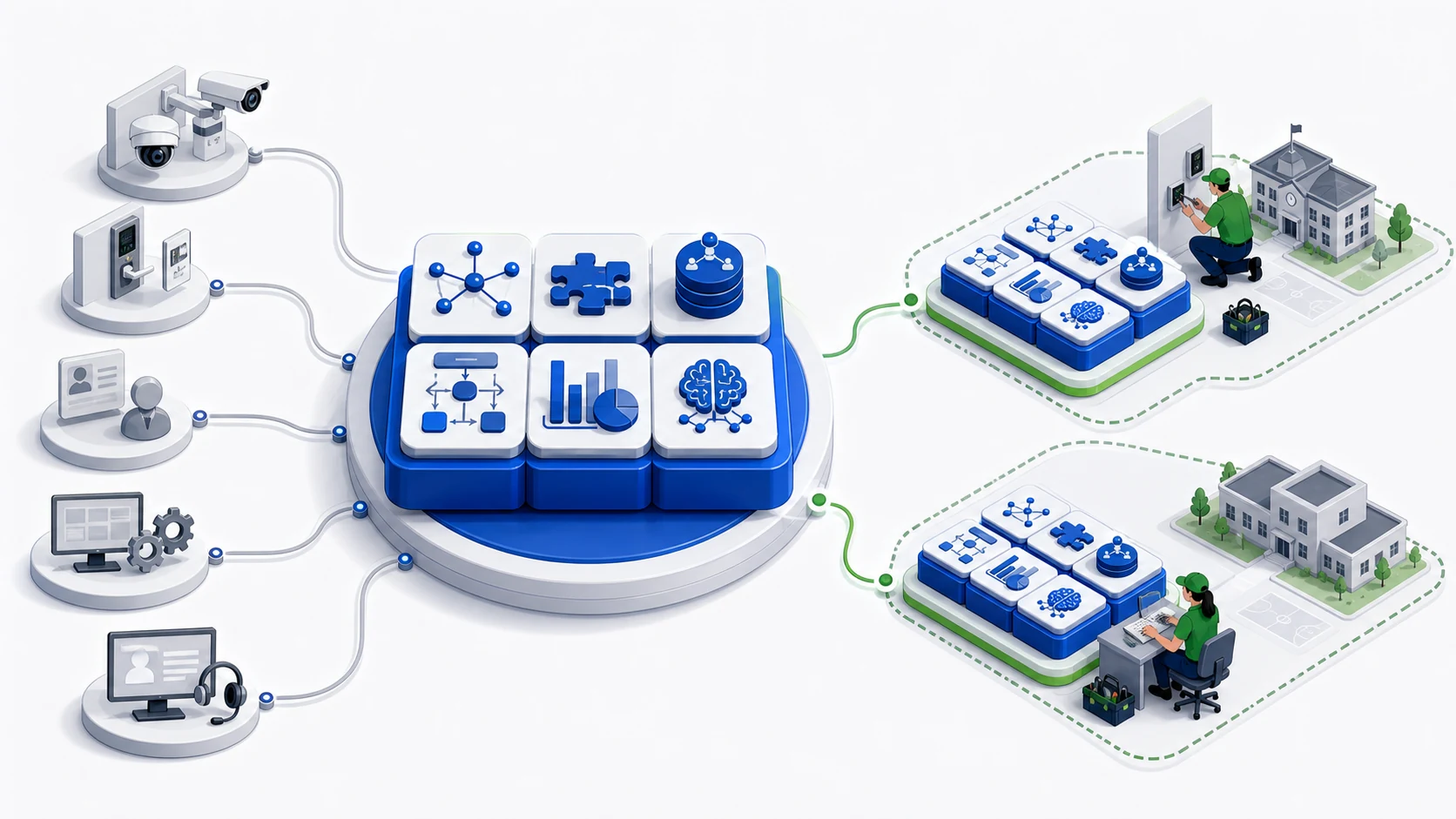
Security platforms connect through reusable Cobalt capabilities and a local service partner to produce verified outcomes across district campuses.

The operating gap

The gap starts after the alert.

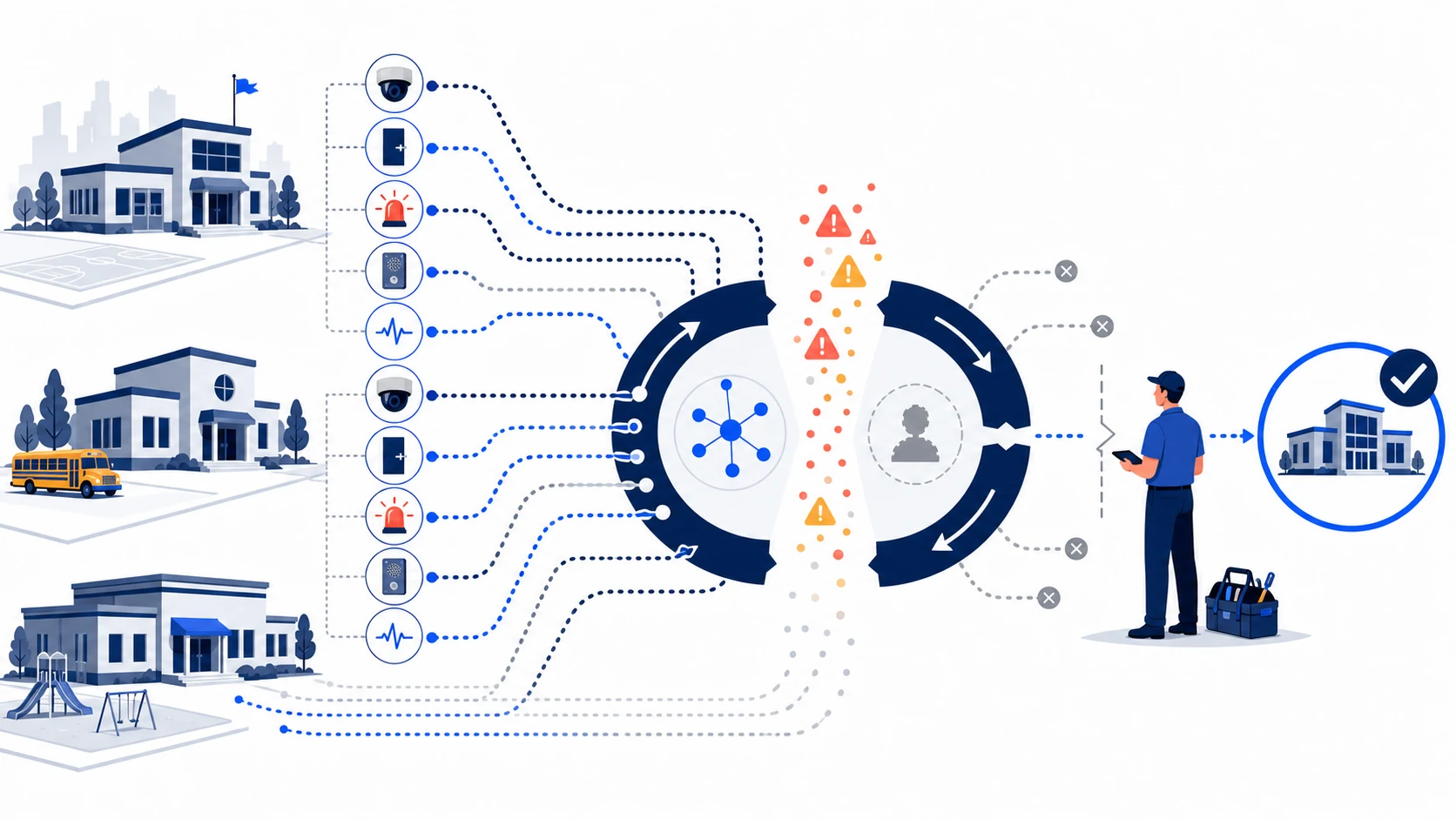
Cameras, access control, alarms, and safety devices already report technical problems. The harder part is connecting the right alert to context, an owner, service work, and proof that the system is healthy again.

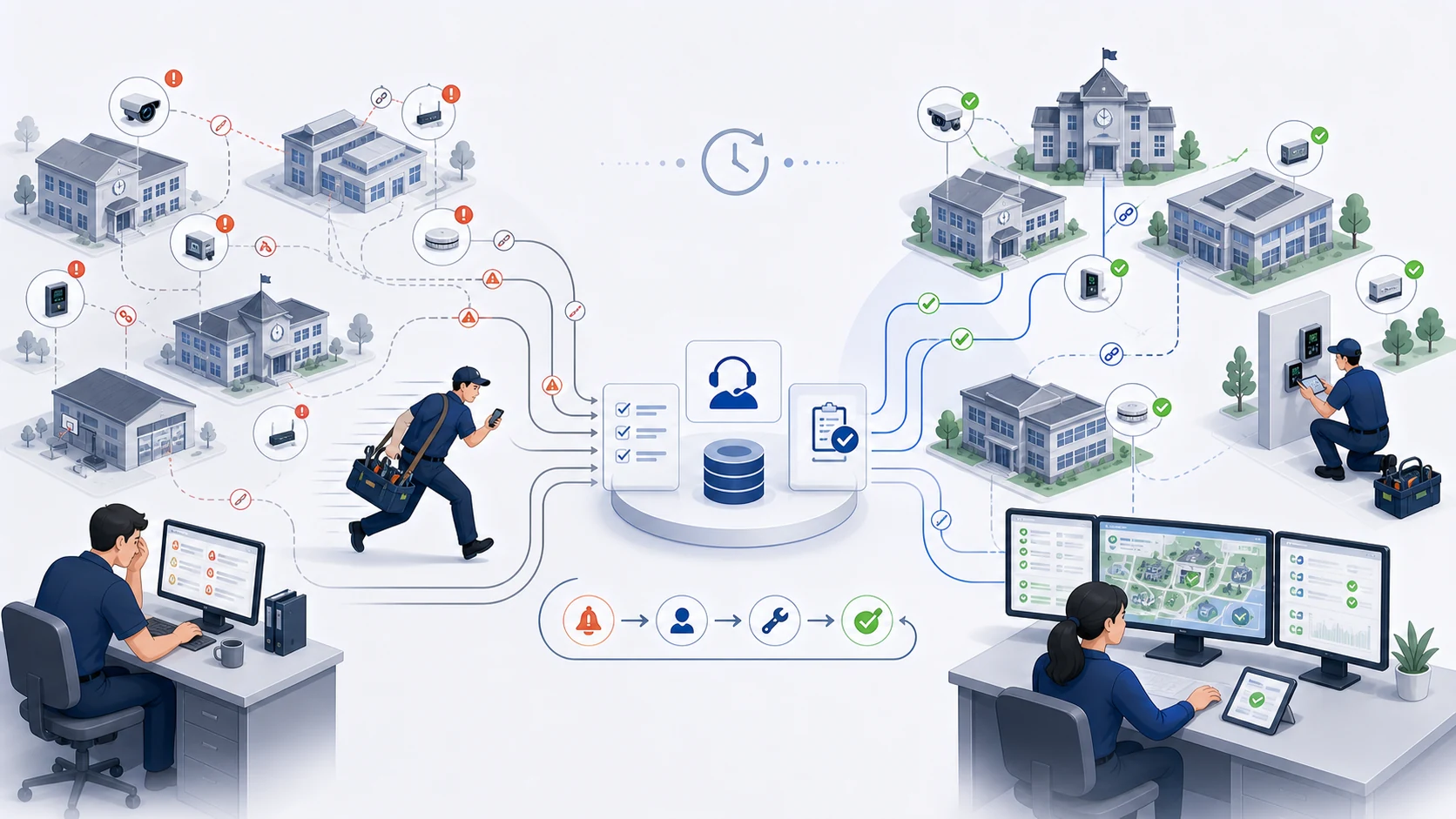
Security systems across several schools produce technical alerts, but fragmented ownership interrupts the path to verified restoration.
The operating gap Useful alerts still need context, a service owner, and proof that the underlying system is healthy again.

Initial use case

District-wide security-system health

Start with a school district where several campuses, systems, and service records make it difficult to see what is working, what is unresolved, and who owns the next action.

From event to resolution

From fault to verified restoration.

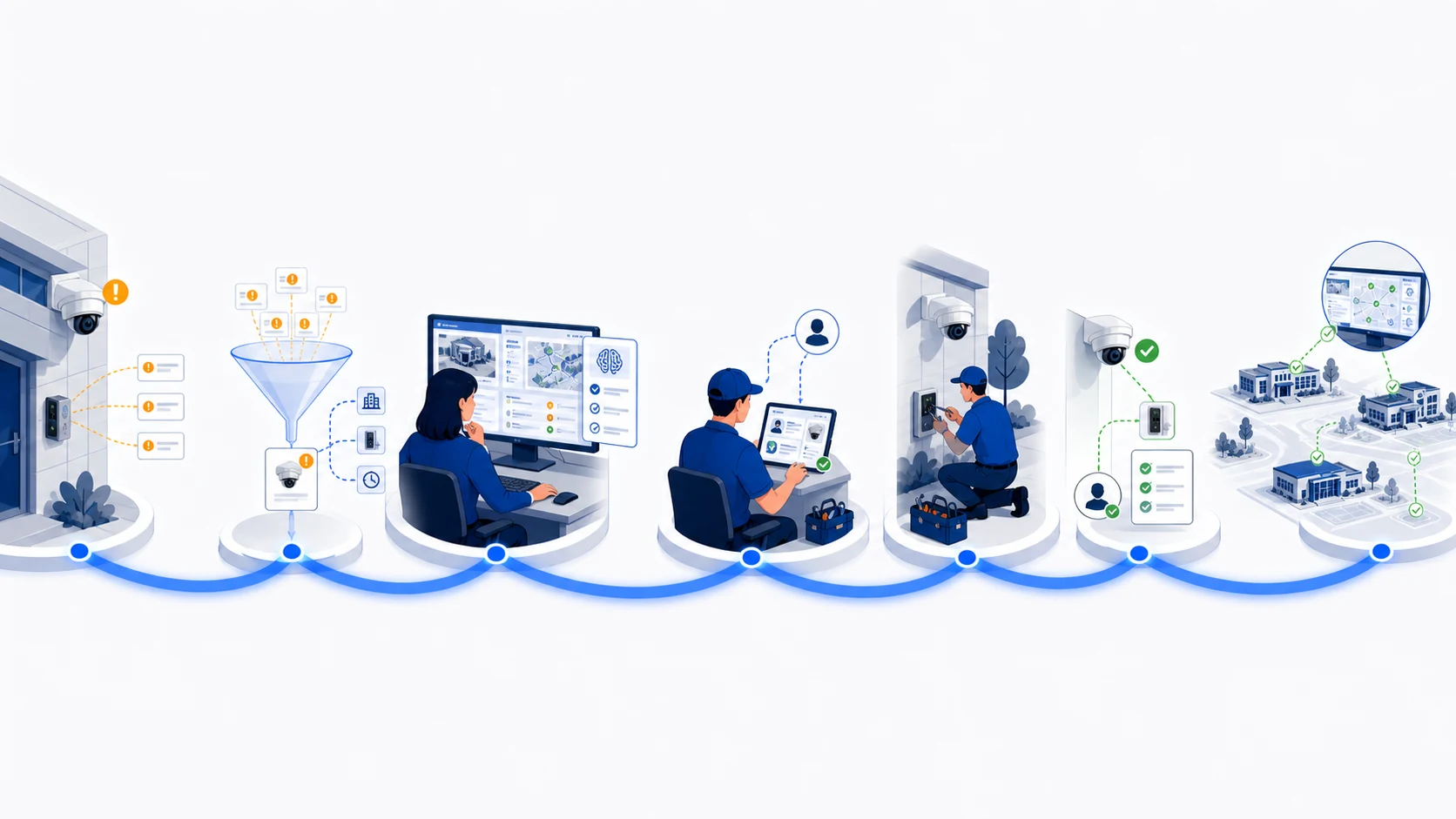
The proposed service would turn approved technical events into traceable work. An issue stays open until the system reports healthy again or a person verifies the repair.

A security-system fault moves through filtering, service management, technician repair, verification, and district reporting.
  1. 01Detect

    Receive an approved technical event.

  2. 02Enrich

    Add site, device, history, and service context.

  3. 03Prioritize

    Filter noise and surface the work that matters.

  4. 04Assign

    Route the issue to a named owner.

  5. 05Resolve

    Track field service through remediation.

  6. 06Verify

    Confirm restoration and update readiness.

What the customer gets

A clearer view across every campus.

School teams would see active issues and resolution status. District leaders would see system health across campuses, service performance, and recurring faults without reconciling separate systems by hand.

  • Current system availability and unresolved faults
  • Time to acknowledge, assign, and restore service
  • Recurring issues across devices and campuses
  • Proactive service compared with reactive repair

Scope boundary Emergency response remains with school and district protocols. The proposed service focuses on the technical health of the systems that support those protocols.

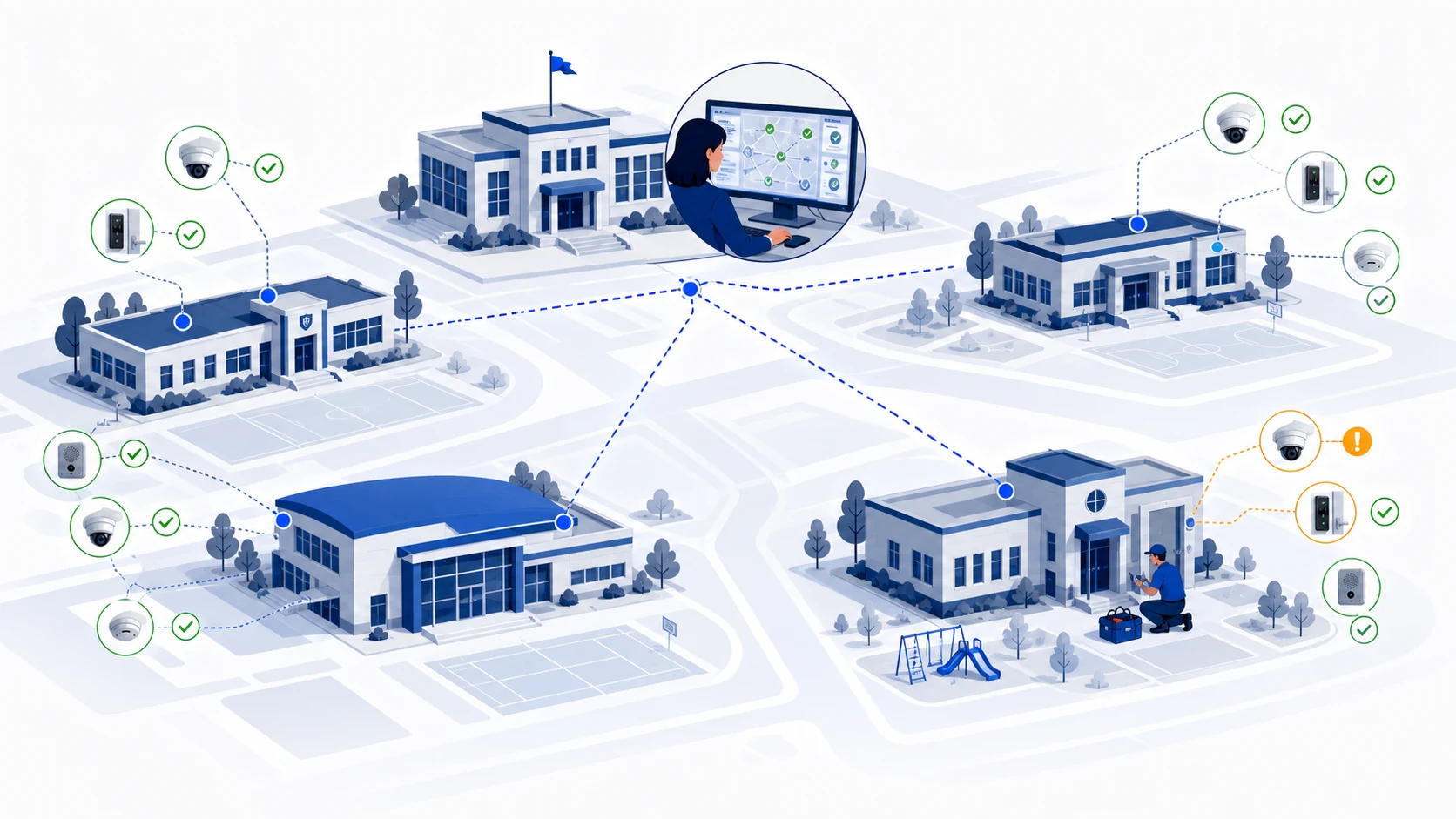
A district-wide operating view connects the technical health of multiple schools while a local technician resolves an active fault.
A reactive district security estate becomes a managed operating record with verified health and proactive service.
The intended customer outcome Replace reactive uncertainty with visible system health, accountable service, and fewer recurring problems. The pilot would test whether those improvements hold.

Proposed delivery model

One local service relationship, backed by Cobalt.

The local Cobalt partner would remain the customer's service relationship and field-service operator. Cobalt would provide the reusable integrations, event definitions, workflow templates, and measurement model.

Customer environment Approved systems, permissions, sites, and outcomes
Local partner Primary relationship, service workflow, and field work
Cobalt capability Reusable integrations, event model, workflows, and measurement
Existing security and service systems connect to reusable Cobalt product modules deployed by local partners in separate customer environments.
Reusable without pooling customer data Cobalt would standardize the integration patterns, event model, workflows, and measurements while each customer environment remains separate.
Systems and integrations

Confirm access before promising support.

Source systems would be selected during discovery based on secure API access, event quality, permissions, and the work required to maintain each connection.

Customer data

Keep each environment separate.

The concept does not require a pooled repository of raw security data. Access, retention, identity, and permissions must be agreed before any connection is made.

Human responsibility

People own consequential decisions.

AI may help classify faults, summarize history, and suggest next actions. People approve actions, own service work, and verify restoration.
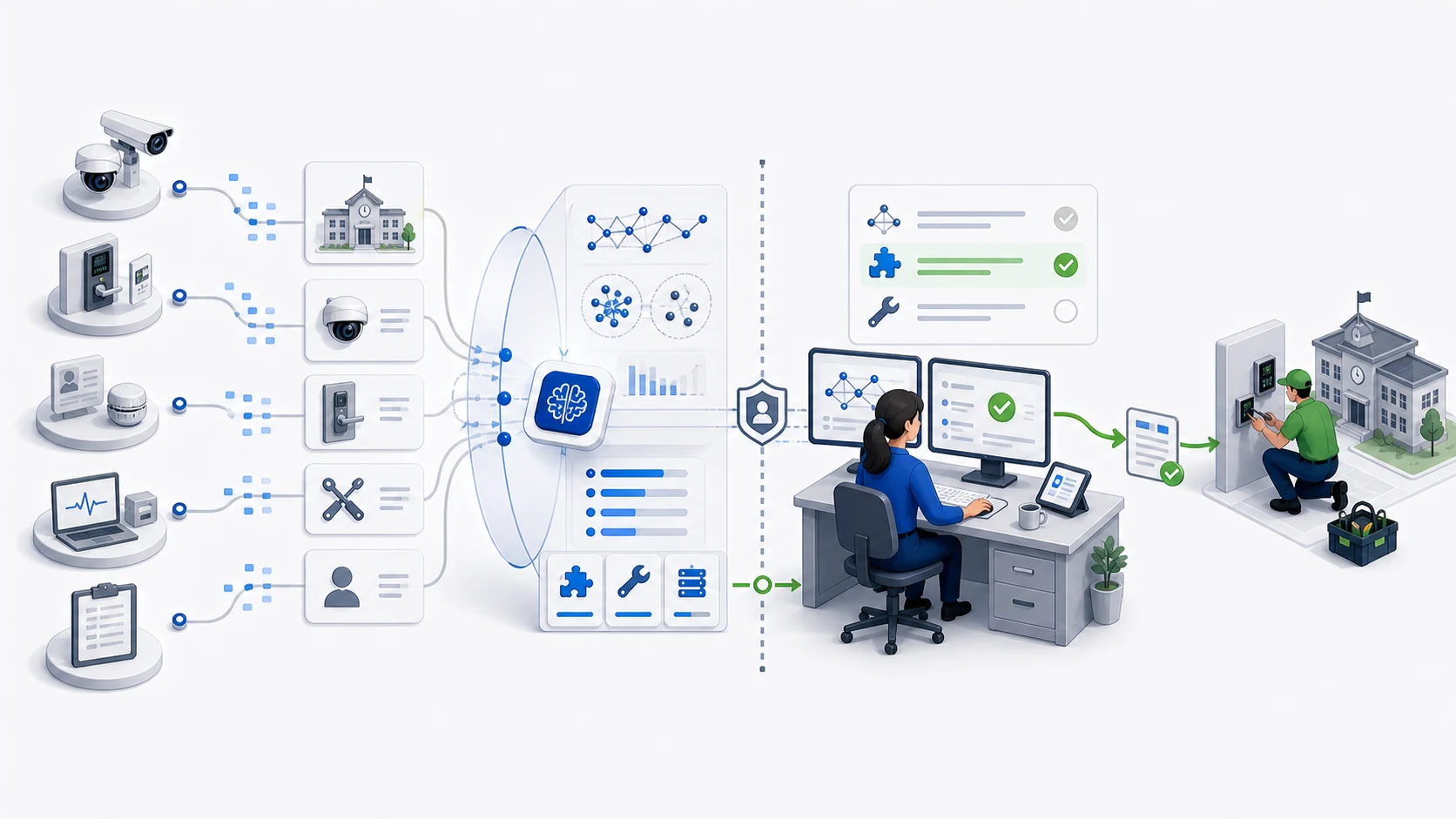
AI helps classify and summarize a security-system issue while a service manager reviews the evidence before assigning work to a technician.
AI supports the service team AI may classify faults, summarize history, and propose next actions. The service manager remains responsible for the operational decision.

Proposed first pilot

One district. Multiple systems. Multiple workflows.

The pilot would test customer demand, secure access, operating improvement, delivery effort, and repeatability before Cobalt funds a broader product.

01Discover

Confirm the customer problem, source systems, workflows, access requirements, and baseline.

02Connect

Configure selected technical events from multiple systems and route them into service workflows.

03Operate

Run the workflows with the local service team and measure ownership, restoration, and delivery effort.

04Decide

Expand, revise, or stop based on customer value, feasibility, economics, and repeatability.
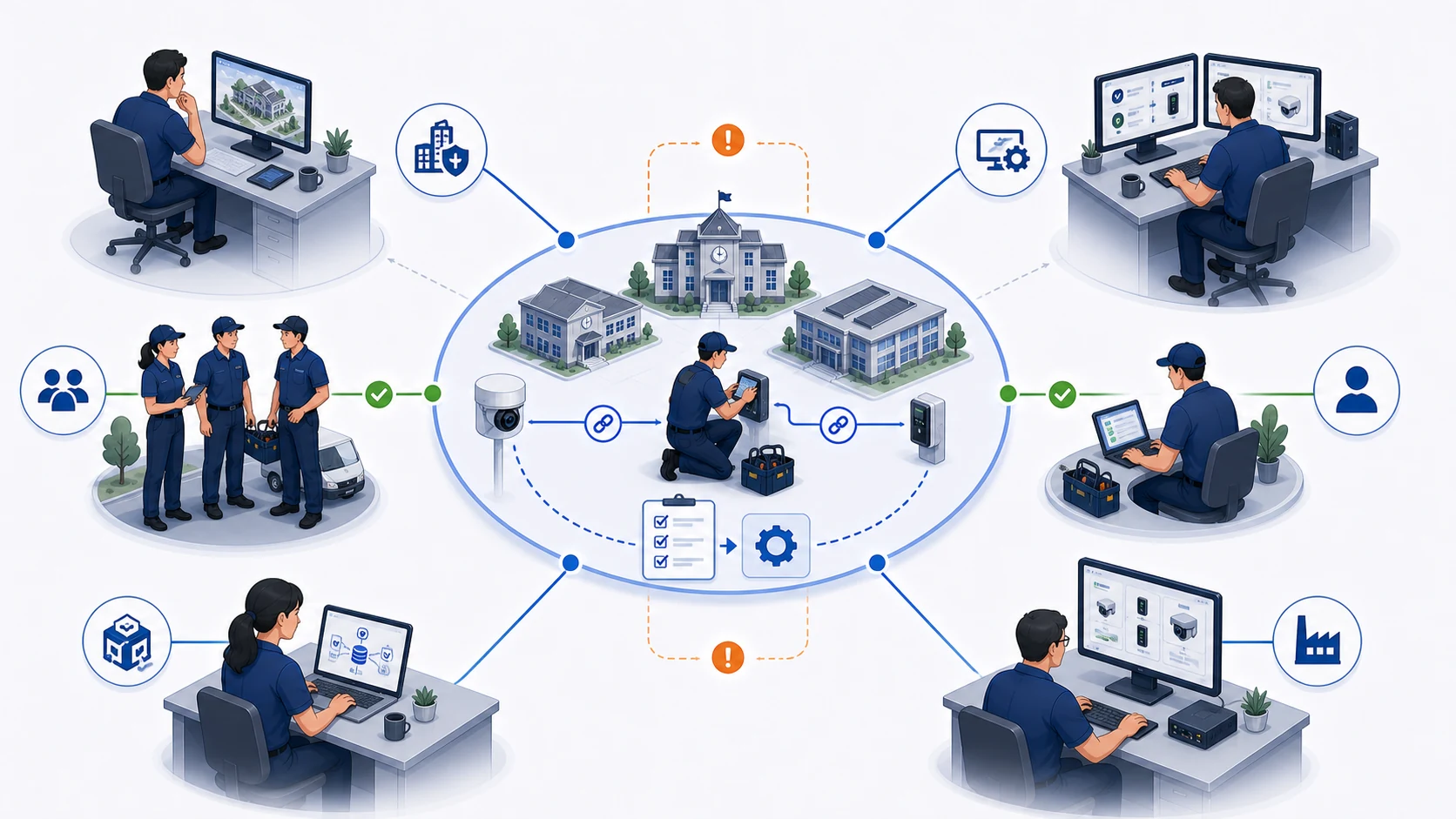
A bounded school-district pilot connects local service, district leadership, IT administrators, Cobalt capabilities, and OEM platforms across multiple workflows.
A bounded first pilot One district, one local service team, selected source systems, and a focused set of technical-health workflows keep the first test manageable.

Commercial hypothesis

Charge for the operating service, not raw alert volume.

01

One-time

Pilot & onboarding

Billing basis Fixed implementation fee
  • Connect multiple source systems
  • Configure technical-health workflows
  • Establish access, governance, and permissions
  • Set the operating baseline

Designed to test feasibility, customer value, and delivery effort.

02

Recurring

Security health

Billing basis Base subscription + included managed events
  • Signal filtering and deduplication
  • Event context and prioritization
  • Workflow routing and resolution tracking
  • System-health and service reporting

Capacity moves into higher tiers as connected usage grows.

03

Premium recurring

Managed operations

Billing basis Security health + managed-service tier
  • Everything in Security Health
  • Proactive monitoring
  • Workflow and false-positive tuning
  • Operating reviews and performance reporting

For customers that want an active operating cadence.
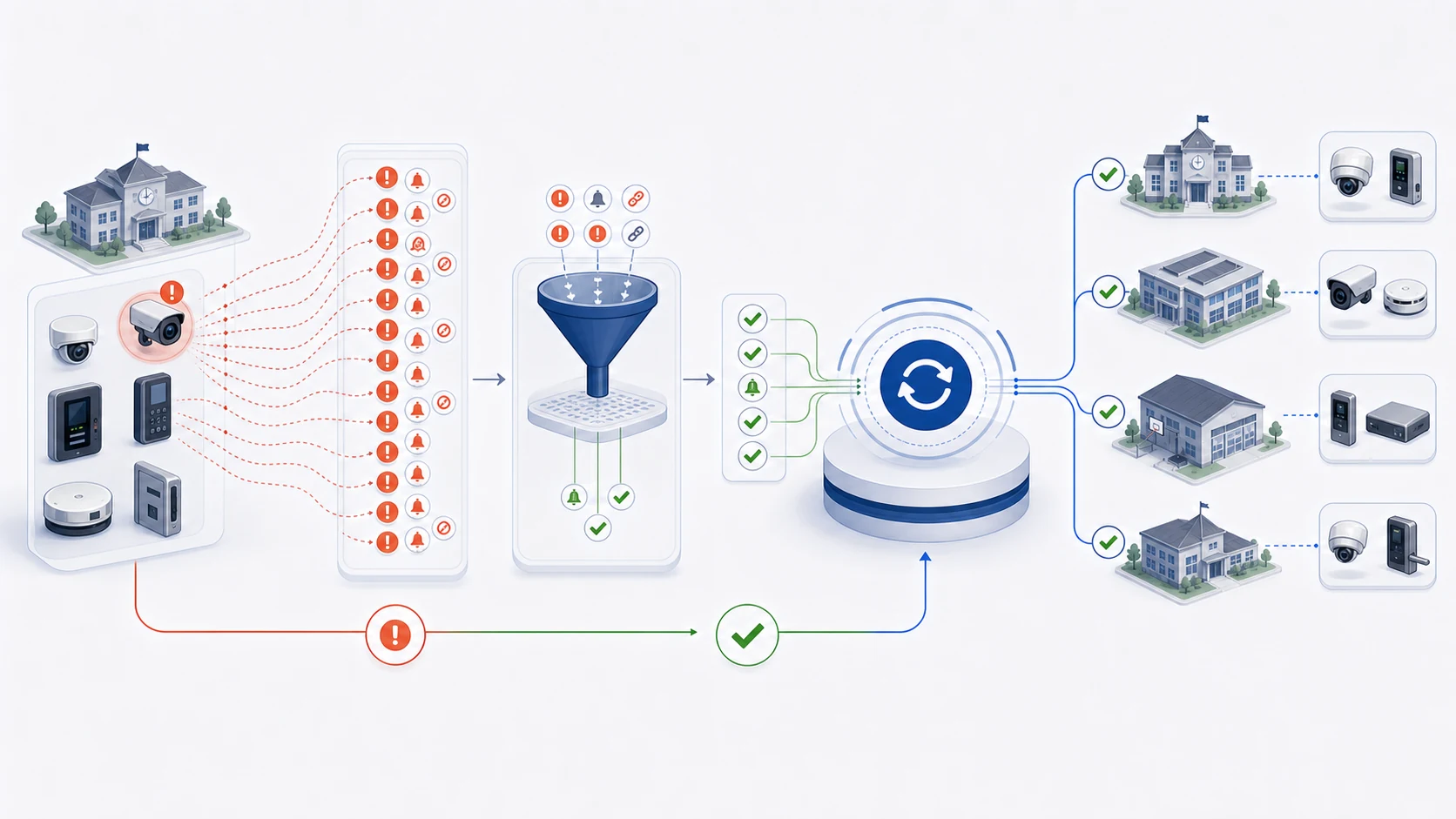
Raw device alerts are filtered and deduplicated into managed events before the service expands across additional systems and campuses.
Usage after filtering The recurring service would count managed events after duplicate and low-value device chatter has been removed.

What counts as a managed event?

An approved event that remains after filtering and deduplication, then is normalized, retained, routed, or analyzed as part of the service.

Raw device chatter and duplicate alerts would not count toward usage.

Final scope, timeline, allowances, and pricing would follow customer and system discovery.
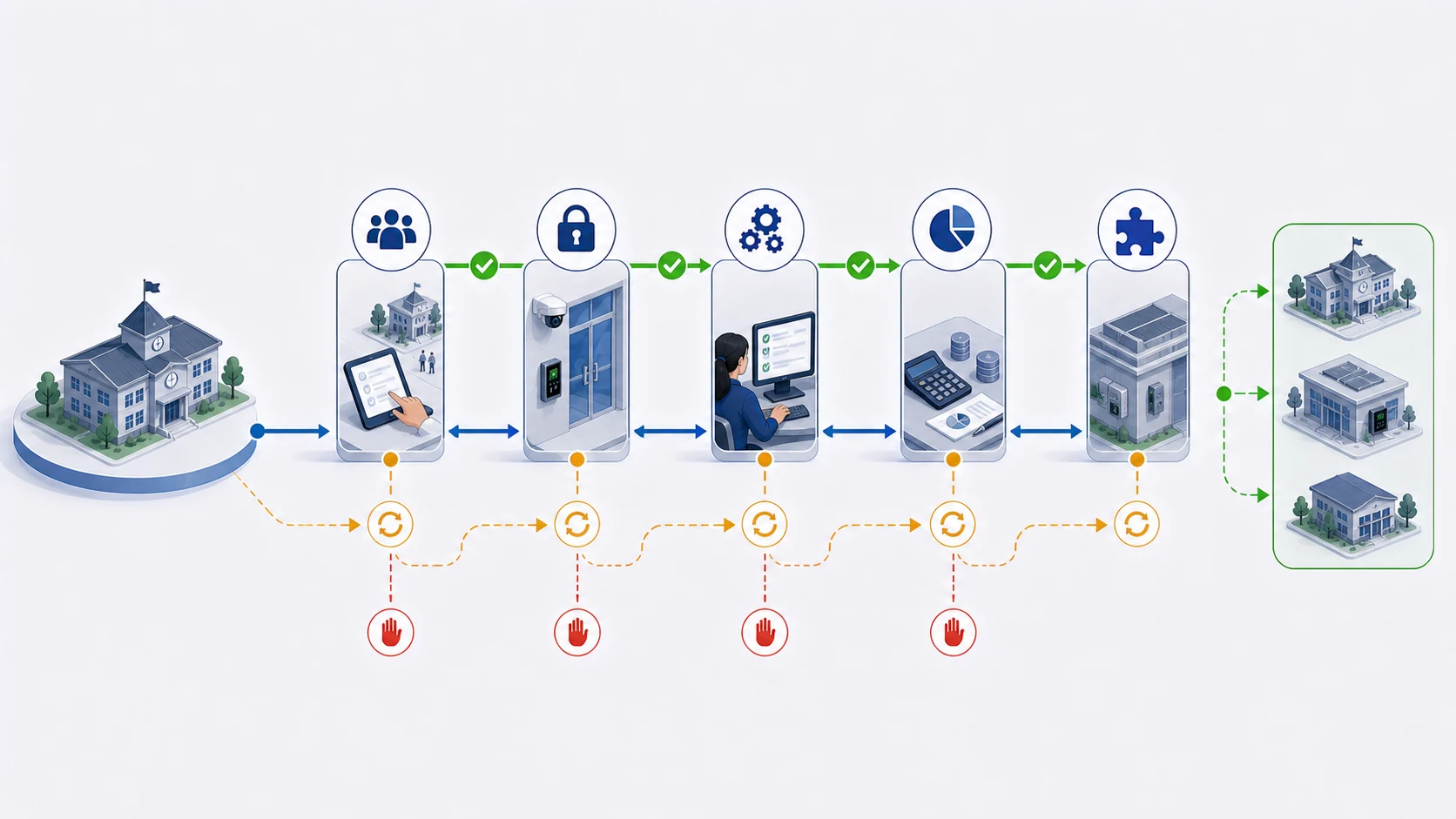
A pilot moves through demand, access, workflow, economics, and repeatability checks before selective expansion.
Evidence before expansion Customer demand, secure access, workflow improvement, delivery economics, and repeatability would each need to support the next investment.

Next step

Find out which workflows are worth piloting.

Start with the customer problem and source systems. Confirm access, ownership, measures, and delivery effort before committing to a broader build.

Talk with Cobalt
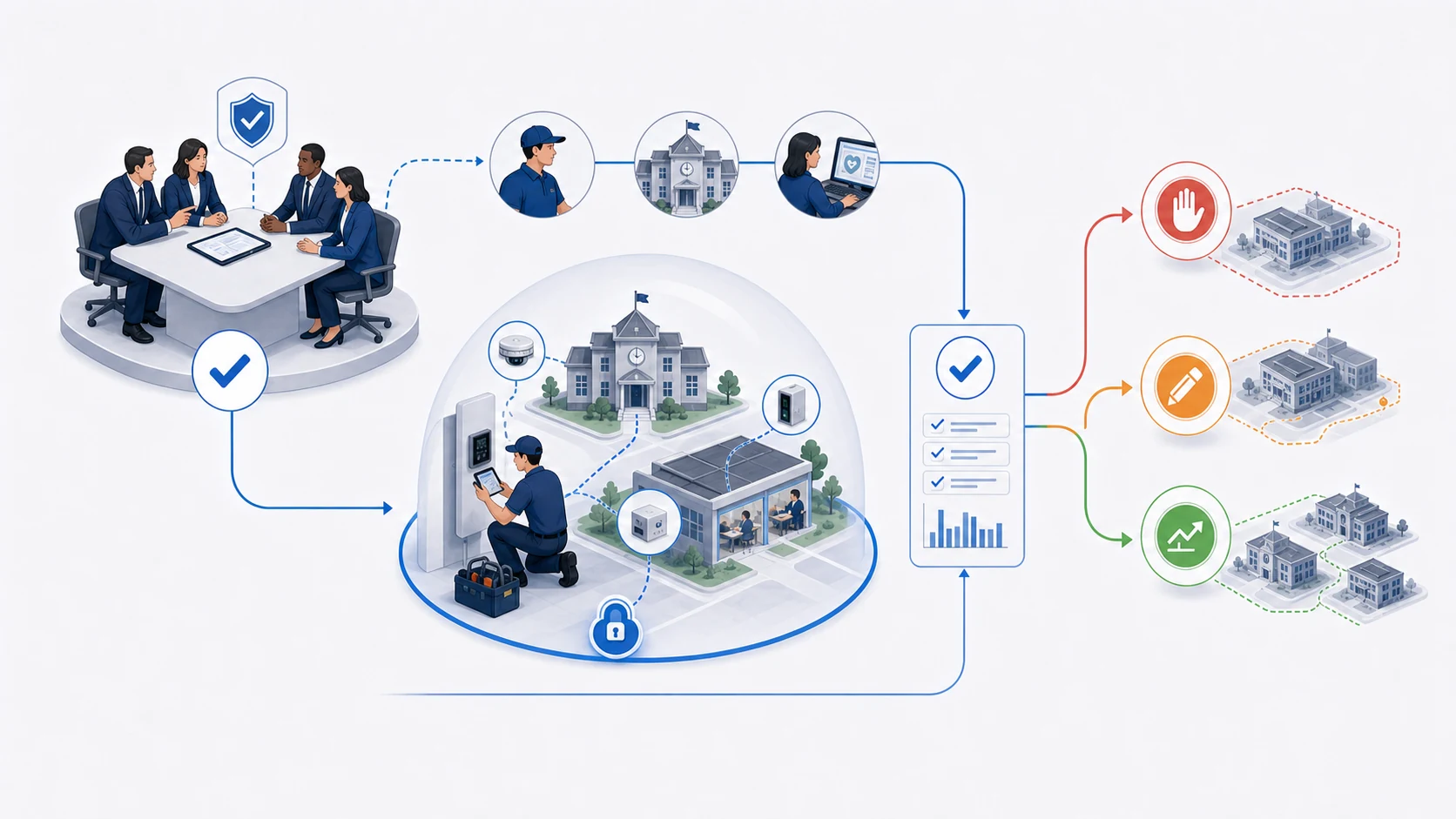
A bounded district pilot produces evidence that supports a decision to stop, revise, or selectively expand.