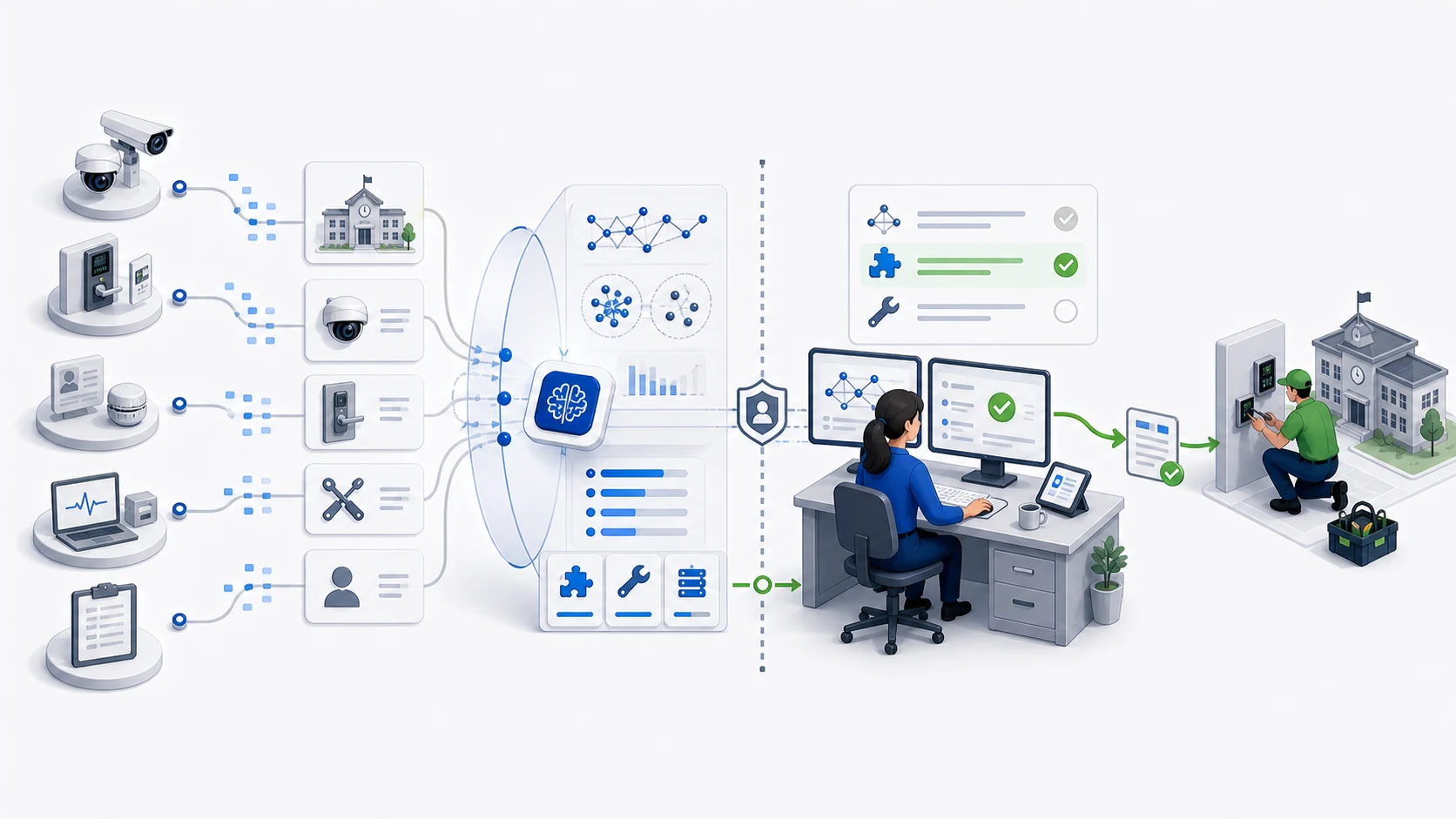
System architecture hypothesis

One governed path from signal to verified outcome.

Cobalt would connect existing physical-security systems to governed data, service workflows, ITSM, analytics, and the people responsible for resolution.

Explore the system
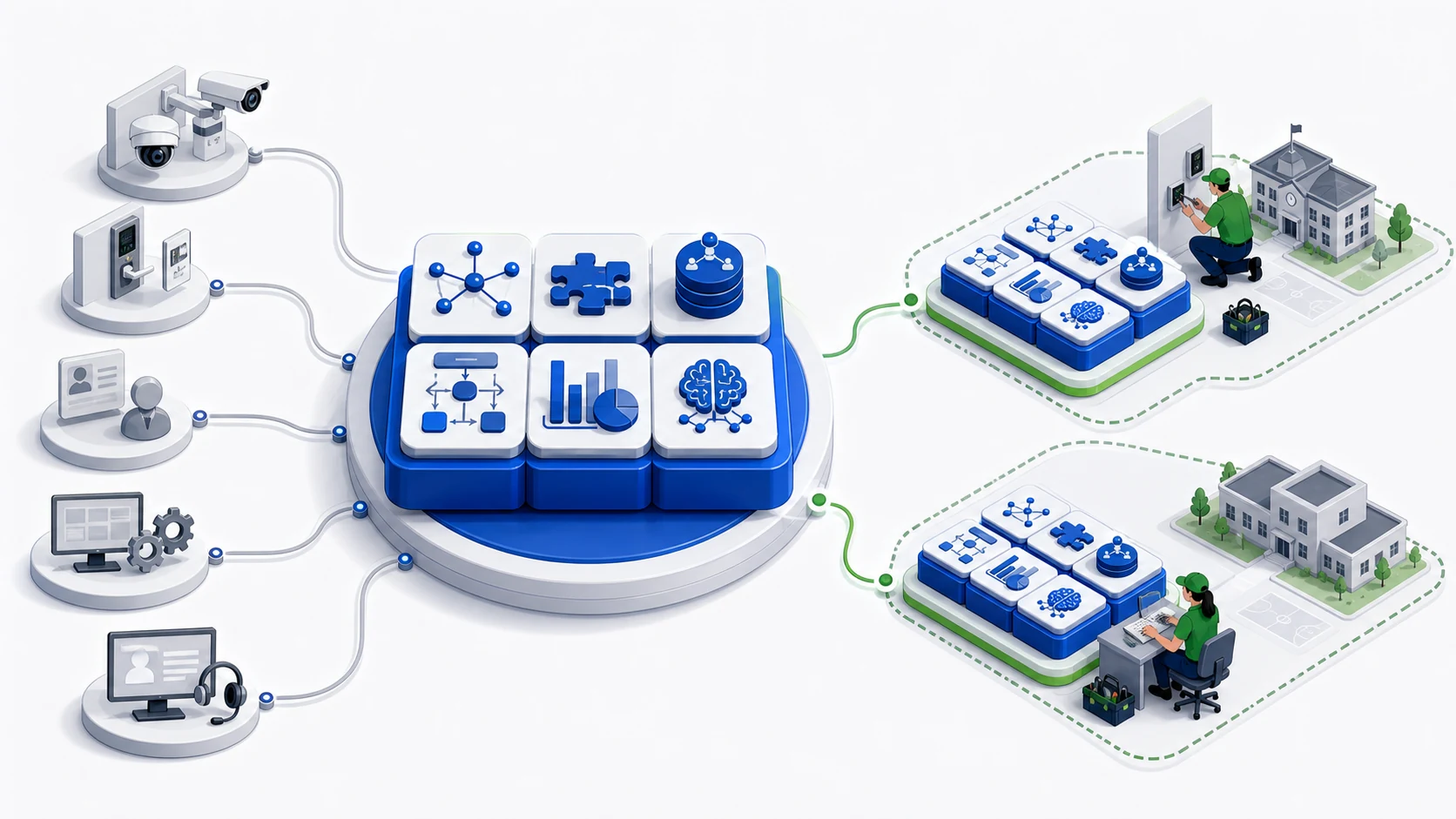
Existing security systems feed reusable Cobalt capabilities that support separate customer environments and local service teams.
Reusable platform, isolated customer data

Proposed architecture

How the system fits together.

Selected events move through a controlled operating path. Each stage has a clear job, and each customer remains isolated from every other customer.

Working design Final components depend on customer systems, access rights, deployment constraints, and pilot findings.
01

Existing systems

  • Cameras and video
  • Access control
  • Alarms and intercoms
  • Health and service data
02

Integration edge

  • Reusable connectors
  • API adapters
  • Secure ingestion
03

Governed event foundation

NormalizeCommon event shape
DeduplicateRemove low-value noise
Event modelSite, device and history
Operational event store
Analytics warehouse
04

Action layer

  • Rules and policies
  • Workflow engine
  • Human review Control
  • Verification
05

Service and insight

Service workflowsTickets, tasks, routing, approvals
Analytics and dashboardsReadiness, SLA, recurrence, trends

On a phone, portrait shows the architecture step by step. Landscape preserves the full system map.

A concrete data path

A camera goes offline. The system stays with it.

The event becomes useful only when it gains context, reaches an owner, and remains open through verified restoration.

  1. 01 Detected

    An approved system reports that a camera is offline.

  2. 02 Enriched

    Site, device, history, warranty, and service context are added.

  3. 03 Assigned

    The workflow creates or updates service work and routes ownership.

  4. 04 Repaired

    The partner technician records activity and completes remediation.

  5. 05 Verified

    System health or a person confirms restoration before closure.
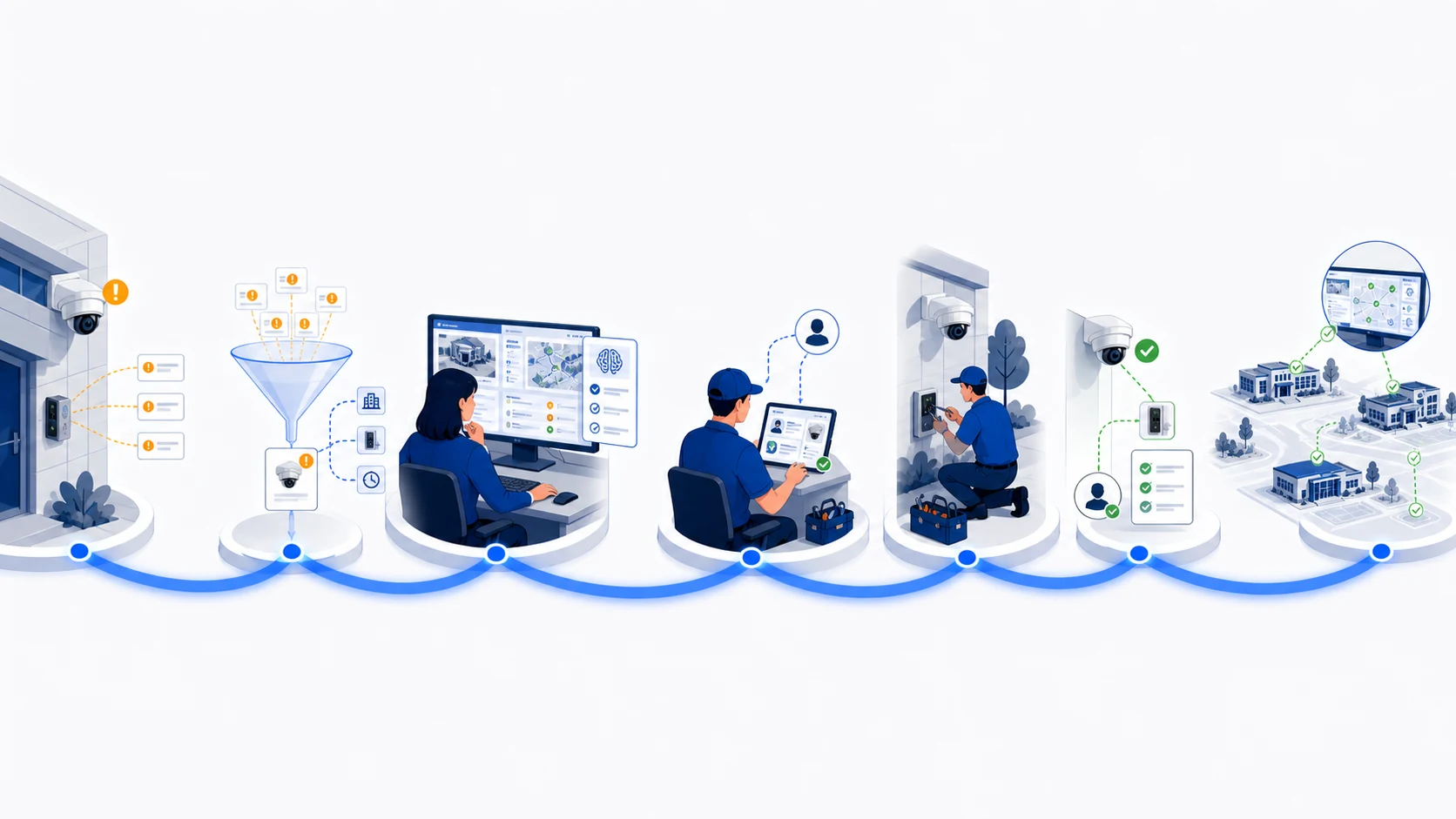
A technical security fault moves through filtering, service assignment, field repair, verification, and district reporting.
Closed-loop service The operating record connects the original signal to the completed repair and the restored system state.
AI supports event understanding and suggested actions while a service manager retains control before field work is assigned.

AI and controls

Trusted context comes before AI.

The data and control foundation comes first. AI can then help people understand events, find patterns, search history, summarize context, and choose the next action.

  • Defined event types and customer-specific context
  • Traceable inputs, outputs, and workflow decisions
  • Human review for consequential actions
  • Feedback from completed and verified service work

Operating boundary AI supports technical service operations. Customer security protocols continue to govern incidents involving people, threats, or emergency decisions.

Deployment and ownership

Built once. Configured per customer.

Cobalt would maintain the reusable product layer. Each customer deployment would keep its own data, permissions, event definitions, workflows, and operating history.

Cobalt reusable product Connectors, event model, workflow templates, controls, analytics model
Customer AIsolated environment

Data, policies, access, workflows

Customer BIsolated environment

Data, policies, access, workflows

Customer CIsolated environment

Data, policies, access, workflows

No pooled raw customer-security data and no cross-customer access.

Cobalt supplies

The reusable product layer

  • Connector framework and canonical event definitions
  • Workflow orchestration and reusable templates
  • Customer isolation, access controls, audit, and platform operations
  • Analytics model, AI assistance, and partner enablement

Customer and local partner retain

The operating relationship

  • OEM platforms, devices, and customer system ownership
  • Local configuration, service ownership, and field work
  • Existing ITSM where it fits, or a lightweight Cobalt workspace for the pilot
  • Human decisions, customer protocols, and outcome accountability

Start with a bounded pilot

Prove the path before expanding the platform.

Begin with selected systems, a focused set of technical-health workflows, one local service team, and clear measures for access, resolution, delivery effort, and repeatability.